For research use only
Free shipping over $150
Independent batch documentation
For research use only
Free shipping over $150
Independent batch documentation
For research use only
Free shipping over $150
Independent batch documentation
For research use only
Free shipping over $150
Independent batch documentation

Cosmetic & Skin

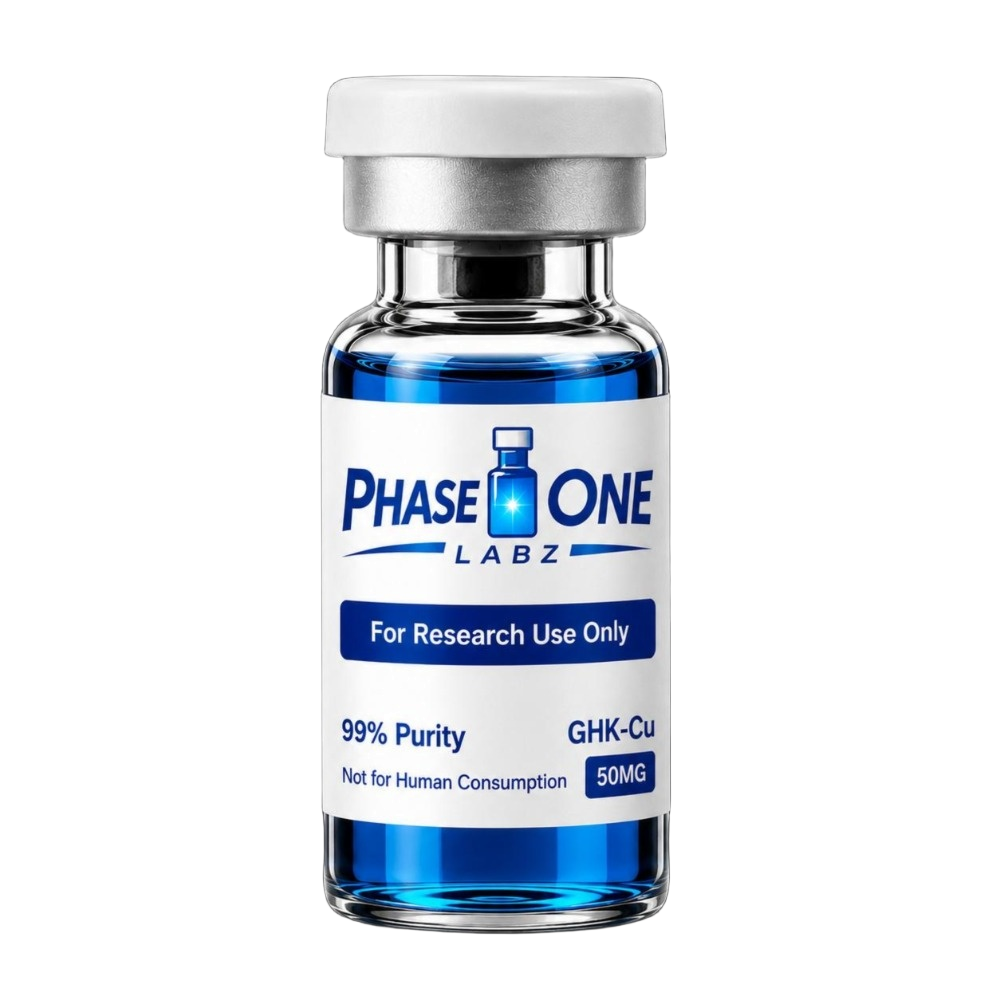
GHK-Cu

In stock
Catalog price
$25.00
25 pts
01
Research brief

Explore GHK-Cu research peptide specifications, available batch records, and certificate-of-analysis documentation for laboratory workflows.

Latest COA
7X Testing
P1-5GHK06Most recent certificate · 2026-07-16
View COA
Processing window openChecking today’s processing window

Daily cutoff · 4:00 PM Mountain Time

4:00 PMMT
Order consoleSecure checkout
MG50 MG
1
Available to addCurrent inventory74units
In stock
Shipping calculated at checkout
Current lot COA available

All sales are final. Due to the nature of the product, no returns, refunds, or exchanges are accepted once an order is placed.

SKU: GHK-CUCategories: Cosmetic & Skin

Product Usage: For research use only. This product is not intended for human consumption, veterinary use, diagnosis, treatment, cure, or prevention of disease.

Description

Product details

GHK-Cu — Copper Tripeptide Complex

GHK-Cu (glycyl-L-histidyl-L-lysine : copper(II)) is a naturally occurring tripeptide first isolated from human plasma, where its concentration declines measurably with age. Across four decades of research literature, GHK-Cu has emerged as one of the most broadly studied regenerative peptides due to its gene-regulatory activity and its role as a high-affinity copper carrier to sites of tissue damage.

Mechanism of Action

GHK-Cu acts as a bioactive signaling molecule that modulates expression of an estimated 30% of the human genome under injury or stress conditions. Well-documented pathways include upregulation of collagen I/III and decorin, induction of metalloproteinases (MMP-2) and their tissue inhibitors (TIMPs) for organized matrix remodeling, and activation of lysyl oxidase for collagen crosslinking. The complexed copper ion serves as a cofactor for extracellular superoxide dismutase (SOD3), linking GHK-Cu to the antioxidant arm of tissue regeneration.

Research Applications

  • Matrix remodeling and extracellular matrix research
  • Collagen and decorin synthesis studies
  • Hair follicle biology and dermal papilla activation
  • Photoaging and UV-damage recovery investigations
  • Anti-inflammatory and antioxidant pathway research
  • Bone density, osteoblast differentiation, and dental repair models

Product Specifications

  • Quantity: 50mg or 100mg per vial
  • Purity: ≥98% (HPLC verified)
  • Molecular Formula: C₁₄H₂₄CuN₆O₄
  • Molecular Weight: 402.93 g/mol
  • Form: Lyophilized powder
  • Storage: Refrigerate after reconstitution
  • Testing: Third-party lab tested, COA available on portal
  • Actual Tested Value: 51.26 mg & 105.38MG

For research purposes only. Not for human or veterinary use.

Research documentation

GHK-Cu laboratory research context

Product information, batch documentation, and educational resources are kept separate so report-specific results are not presented as universal claims.

01 / Overview

Research overview

GHK-Cu is listed as a research peptide for research use only. The catalog context supports copper-peptide complex characterization and cellular signaling models without providing human-use, clinical, or dosing guidance.

02 / Specifications

Compound specifications

SKU
GHK-CU
Catalog group
Cosmetic & Skin
MG
50 MG, 100 MG

03 / Testing

Purity and batch documentation

A current record is available for lot P1-100GHK06, tested 2026-07-22 using HPLC. Refer to the source certificate for its full scope and limitations.
Reported result
99.02%
Laboratory
ILS Labs
Review GHK-Cu COA records →

04 / Handling

Storage and handling records

Follow the product label and batch documentation for the supplied format. Record the lot identifier, receipt date, storage condition, and preparation history within the laboratory’s own handling procedure.
High Demand

Compounds inhigh demand.

Laboratory research catalog only.